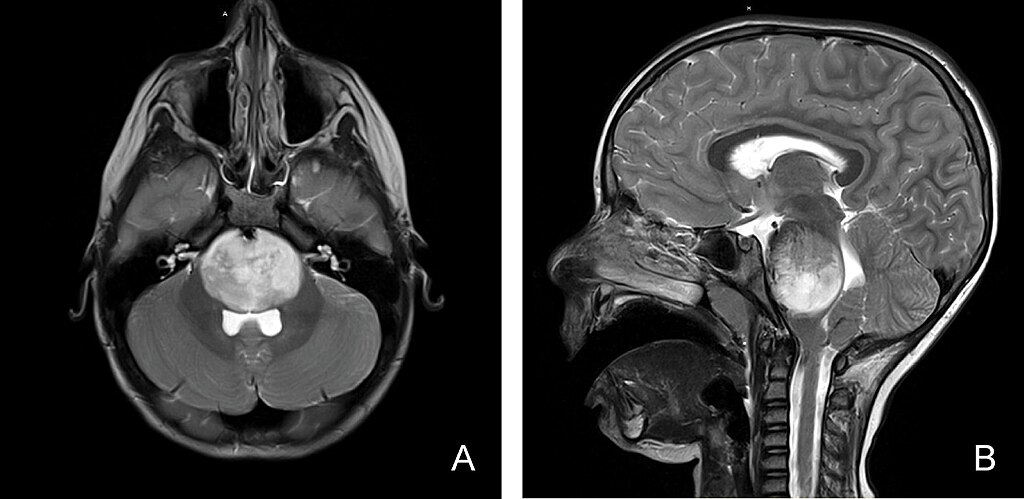
Glioma
A glioma is an abnormal growth of cells (tumor) that forms from glial cells found in the brain and spinal cord. Glial cells provide the structural backbone of the brain and support the function of neurons (nerve cells). Brain tumors are classified as primary, those that arise in the brain, or secondary, those that have spread to the brain from another part of the body. In the United States, about 24,000 people per year are diagnosed with a primary brain tumor. Most primary brain tumors in adults have no clear risk factors identified.
Brain tumors can produce symptoms due to local brain invasion, compression of healthy brain structures and by increasing pressure within the brain (increased intracranial pressure). Symptoms vary based on what parts of the brain are involved.
Mass effect upon adjacent gyri
Gyri are ridges on the surface of the brain. There is a mass effect or compressing/pushing of the adjacent gyri from the arachnoid cyst mentioned above.
Potential Cancer.
Mild cerebral atrophy
Brain tissue tends to shrink (atrophy) at the rate of about 0.2% per year from the age of 30 and then accelerates after the age of 60, due to genetic, environmental, and lifestyle factors. Volume loss which is out of proportion to age may represent a pathologic process or risk factor for future decline in cognition. There are currently no established guidelines for investigating or monitoring this condition; however, you could consider repeat MRIs to monitor progression or stability of this finding.
Microangiopathy
Microangiopathy is a term that is used to describe changes to the small blood vessels in the brain. The cause is not completely understood, but could be the result of plaque buildup and hardening (atherosclerosis) of the small blood vessels nourishing the brain. This is the same process that can narrow and damage heart blood vessels.
Cerebellar atrophic change
The cerebellum is the area at the back and bottom of the brain, behind the brainstem (where the spinal cord meets the brain). It receives information from the sensory systems, the spinal cord, and other parts of the brain and then regulates motor movements. The cerebellum coordinates voluntary movements such as posture, balance, coordination, and speech, resulting in smooth and balanced muscular activity. It is also important for learning motor behaviors and coordination of eye movements.
Diffuse atrophy of the cerebellum refers to a progressive and irreversible reduction in cerebellar volume. It is found in a wide variety of clinical scenarios. It can also result from a variety of causes including drugs (alcohol and/or certain medications) and neurodegenerative diseases.
Demyelinating disease
Demyelinating diseases are any conditions that cause damage to the protective sheath (myelin) that covers nerves, which then causes communication problems in the nervous system and brain. One example of a demyelinating disease is multiple sclerosis, an autoimmune disease of the central nervous system. Common symptoms of demyelinating disease include extreme fatigue, vision problems, and difficulty with movement.