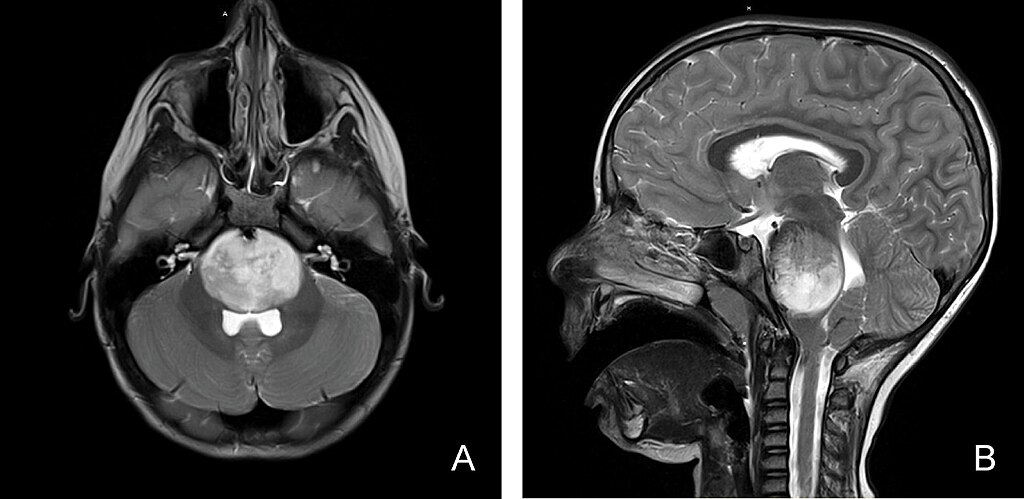
Demyelinating disease
A demyelinating disease is any condition that causes damage to the protective covering (myelin sheath) that surrounds nerve fibers in your brain, the nerves leading to the eyes (optic nerves) and spinal cord. When the myelin sheath is damaged, nerve impulses slow or even stop, causing neurological problems.
Indeterminate brain lesion
A brain lesion is an abnormality seen on a brain-imaging test. A brain lesion may involve small to large areas of your brain, and the severity of the underlying condition may range from relatively minor to life-threatening. These lesions will need further work up to for a diagnosis.
Pulmonary/lung nodule
A pulmonary or lung nodule is a “spot” seen on chest imaging. This can be caused by infection, scarring or lung cancer.
Lung cancer
Cancer that forms in tissues of the lung, usually in the cells lining air passages. The two main types are small cell lung cancer and non-small cell lung cancer. These types are diagnosed based on how the cells look under a microscope.
Pituitary tumor
Pituitary tumors are unusual growths that develop in the pituitary gland. This gland is an organ about the size of a pea. It's located behind the nose at the base of the brain. Some of these tumors cause the pituitary gland to make too much of certain hormones that control important body functions. Others can cause the pituitary gland to make too little of those hormones. Most pituitary tumors are benign.
Intrathoracic endometriosis
Thoracic endometriosis is a rare condition that happens when endometriosis patches grow on or around the lungs. This can cause shortness of breath, chest pain, cough, and in some cases, a collapsed lung.