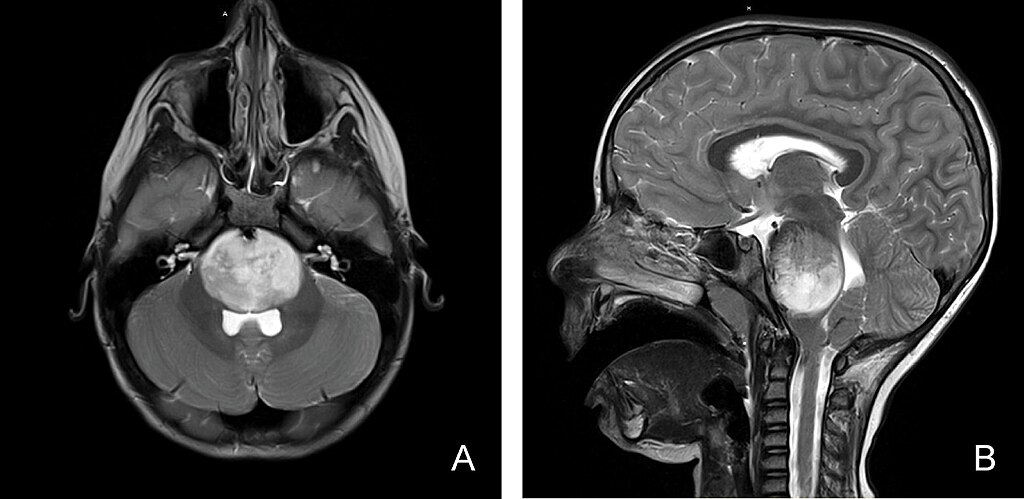
Rathke cleft cyst
The pituitary gland is a small gland deep within the base of the skull. It produces hormones that control many different processes, including metabolism, growth and reproduction. Sometimes during development, a cyst (fluid-filled pocket) can form in the pituitary gland (i.e. Rathke cleft cyst). Pituitary cysts are not cancerous. If the cyst grows, it can put pressure on the pituitary gland or nerves, causing symptoms such as headaches, visual impairment, and/or hormone changes.
Xanthogranulomas
Xanthogranulomas of the choroid plexus are common benign (non-cancerous) lesions. It is unclear whether they represent a distinct entity from adult choroid plexus cysts, but they share imaging characteristics. As the clinical history is the same, the distinction is largely irrelevant.
Syringomyelia
Syringomyelia is a condition in which a syrinx (fluid filled cyst) develops within the spinal cord. The most common cause of syrinx formation is Chiari malformation type I, a condition in which brain tissue protrudes into the spinal canal. Other causes include birth defects, spinal cord tumors, spinal cord injuries, and conditions such as meningitis and multiple sclerosis.
Infarct/Stroke
An infarct (short for infarction) is a stroke caused by an interruption of a healthy blood supply to the brain. Old infarcts are not reversible. They are most commonly caused by the same risk factors that cause heart disease, including high blood pressure, poor cholesterol levels, diabetes, smoking and sometimes emboli (small particles such as blood clots or plaque that traveled from other parts of the body).
Meningoencephalocele
Meningoencephalocele is an abnormal sac of fluid, brain tissue, and meninges (membranes that cover the brain and spinal cord) that extends through a defect in the skull. The condition is typically congenital (present at birth) but can infrequently develop in older individuals. The underlying cause of the condition is uncertain. Hydrocephalus (a build-up of cerebrospinal fluid inside the brain) and abnormalities of the eyeball and tear duct have been clinically associated with meningoencephalocele.
Mass effect upon gyri
Gyri are ridges on the surface of the brain. Mass effect is compressing/pushing of the adjacent gyri from an adjacent mass.